
Tochumara

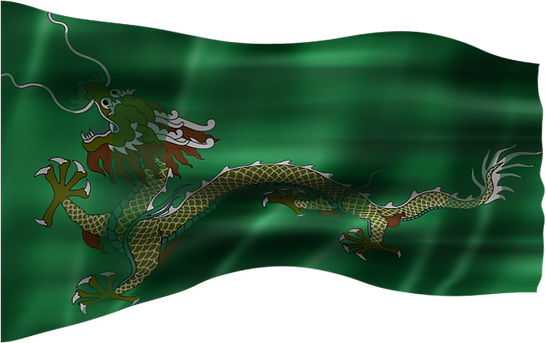
The Jade Lands


Tochumara also known by several other names in the
Western Kingdom such as the Far East, the Mysterious
East, the Jade Lands, and the Dragon's Lands is all of
what Westerners dreams the lands to be and more.
Tochumaran culture is completely alien to most
Westerners, a culture where honor is everything and
luck, both good and bad is praised as part of the natural
order. Dragons in the East are worshipped and the
Eastern dragons seem to be a literal part of nature and
the life giving elements. "Evil" dragons are virtually
unheard of in the East, or very rare at least.
It is a land where silks, spices, and jade flow and are
valued almost as much as gold, itself, a land where the
rulers are warriors known as shogun with noblemen
known as daimyo under them and both answering to the Emperor who in turn is behoven to the Dragon Emperor, himself.
NOTE: I am not going into details into the lands of Tochumara as the Eastern world of Garn is a campaign in itself akin to past editons of Oriental Adventures (which I would call Adventures in the Far East if I were to remake the campign setting today).
As such, there is just too much to cover for a supplement that is not taking place there. So I will touch on a few places that someone from the East might have heard of so that an Eastern character in the West is not completely blind to Tochumara.
Players playing an Eastern character should feel free to fill in the blanks with what they imagine things to be like or with little details such as their village and family names, etc.
After all, anything too outlandish may just be "lost in translation".
Quick Reference Links
The Jade Lands, Shou Lung, Tochi Taiyo, Port Rantan. Kurai Fezā, Ishi Lei, The Great Dens, Nōjō (Farmlands),
Kaizoku and Yakuza, Jinja (Shrines)
Tochumara, sometimes called the Land of Utsukushi Hisui,
or the Land of Beutiful Jade, is a large, rich land of every
environ imaginable from the giant northern mountains
of Ishi Otachi also called the Stone Emperors, to the
steamy swamps of Nureta Kibo, and rich forests, flowing
rivers, and lush tropical islands known as the Jade Isles.
As various as the land are, so are the peoples of the East,
with the animal spirits given human form as hengeyokai,
the "Eastern dwarves" known as the korobokuru who live
in out of the wy villages, only venturing outside their
farms and forges out of a strong wnderlust or if
encountering other peoples and becoming curious about
them, the spirit folk who are the decendants of
humanoids and spirits both with unnaturally beautiful
features and spiritual abilities, the orang bunian or
"Eastern elves" who resemble elves in other lands but are
"dragon blessed", the fur covered and muscular veren, the
bird-like kenku, the oni touched noroi, and, of course,
humans.
As various as the peoples in the West, each species of
the East has its own beliefs and ways of life, though in
contrast to the West, almost all peoples of the East give
veneration to the Dragon Emperor and the Seven.
Even further, the typical occupations and callings of Westerners are largely practiced in different ways in the East. Thouh you may very well find fishermen, hunters, merchants, cooks, blacksmith, and so on, the town or village visited may, instead of a townhead, lord, or lady, be overseen by a daimyo noble who in turn owes fealty to the areas iliteristic shogun leader who then serves the Emperor.
Brbarians may be referred to as Ezo, where priests and clerics might be shukenja, and other spellcasters called wu jen, whereas honorable fighters similar to knights may be referred to as samurai, and specialized assassins may be known as ninjas.
All Tochumaran peoples except for outcasts or true monsters, concern themselves with honor. Honor, in the Esst follows a complex series of tenets and rules referred to as the Bushido. This "Law of Honor" is said to be pssed down from the Dragon Emperor, himself, and is upheld spiritually, thethered to the Heavens and Underworld themselves.
As such, every aspect of Easter life, from greeting another person to exchanging goods and even doing battle is all under the pervew of honor and, in fact, can supernaturally effect those aspects and ever aspect of life.
There are many spiritual creatures in the East falling under the mostly benevolent kami and the more dangerous yokai, both being respected as honor demands, despite their nature (leading to many "battles" with the spirits being completed through cunning and honrific interractions more than physical force).
Bakemono are the moe common monsters similar to goblin or ogres but coming in a variety of forms from three eyes muscular brutes scaly, thing green skinned cyclops, or a black feathered monster with a single corckscrew horn and tiny wings on its back. These are the monsters that are considered filth and to be killed on sight, with no honor being involved, accept the honor for hunting and killing such vile creatures.
Finally, a person from the Far East speaks a different form of Common called the Trade Tongue. Visitors to Tochumara should pick up the Trade Tongue or the Noble Tongue (Boki Hanasu or Noburu Hunasu).
Shou Lung
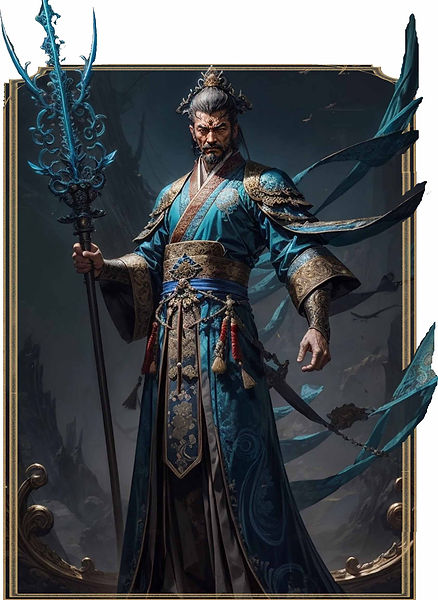
Shou Lung also known as the Empirial City, is the Capital of
Tochumara and the home to Emperor Haruto Oshima, the
current Emperor of the Jade Lands.
The Emperor is always seen, publicly, with his symbol of
power and authority, the Lung Shita or Dragon Tongue, a
powerful weapon said to be blessed by the Dragon Emperor
himself. Aside from that, he wields the Ribingu Irui or
Living Garments and the Stone of Tamashi.
The grand city of Shou Lung is a bustling city of trade, magic,
learning, and art. A city where shogun and daimyos meet and
discuss the state of the Empire. Its a city to behold, possibly
the largest, most beautiful city in the world with its parks of
koi ponds and cherryblossom trees, The architecture of the
Empirial City is ancient and amazing to behold. The markets
sell things from around the world and the tempes to the
Dragon Emperor and the Lucky Seven stretch towards the
heavens, with beutiful spires and glass murals.

Tochi Taiyo
The mountain town of Tochi Taiyo is a mix of peoples from all
over the East including the kenku, the yakfolk the veren, a few
hengeyokai, and humans as well.
The town is far up and out of the way and the ssortment of
species get along well here, coming to trade, work,
or live in the high mountain environment.
The surrounding mountains contain
simurgh, or wolf birds,
giant birds with
ferocious
canid-like
heads and fangs.
Though the
town itself, is safe,
the climbing road to
Tochi Taiyo is rife with
dangers, even beyond the simurgh.
The daimyo of Tochi Taiyo
is the beautiful Bara
Yoshimono, a spirit
folk who oversees the
mountain town with much
fairness and effeciency.

Port Rantan

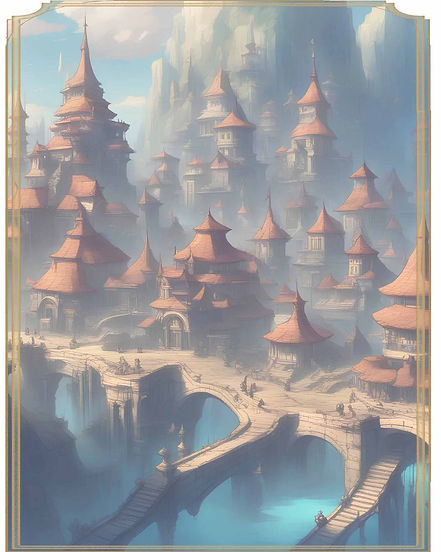
Known as the Lantern Port for the lantern-like lighthouses,
Port Rantan is the largest port city in Tochumara.
The Port city sees all manner of people coming and going,
booking passage or cargo on ships, or making their way as
part of the fishing community.
A large community of korobokuru live as fisher folk in Port
Rantan as well as an asortment of spirit folk, but the town is
mostly made up of humans.
The daimyo of Port Rantan, Takeda Masamune, is a serious
faced man concerned with the profit of his town more than
anything else, other than his status and honor. The
word is that Tokeda has his eyes set on the
position of the domain's shogun, currently
held by Nyotoki Haramatu, an ambition
that has earned him a visit from a
number of ninja and yakuza
assasins.
Despite his mostly dour
attitude and incapability to smile or laught at
most things, the fisher folk of Port Rantan rather
like the daimyo as he is a shrewd businessman who
understands that the moe prosperous his town is, the more
prosperous he himself is, thus the daimyo implements very successful plans to bring profits to the fisher folk, merchants, and everyone in Port Rantan.

Kurai Fezā
The kenku are generally nomadic folk, or folk who blend into
the cities and larger towns of other peoples.
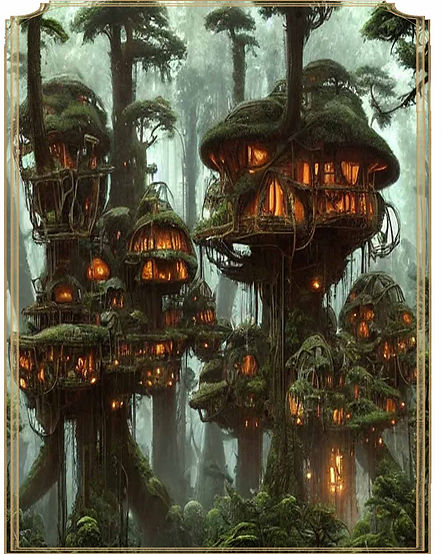
However, a large group of kenku came together to make a
woodland tree village in the expanse of the Midori Kara
wilderness known as Kurai Fezā or Black Feather.
This group of kenku is dedicated to trying to uncover the
secret to returning their people to the beautiful winged
creatures they used to be, but as much as this (or,
perhaps moreso) these kenku have formed a community
that acts as one, large family.
Viitors to Kurai Fezā are not many outside of wandring kenku
who becom curious about the settlement (some
even deciding to stay and others giving in
to their wndering nature). Most
outsiders, in fact, are not even aware
that the kenku settlemnt exists.
The village is run by the Hyogi-kai, a councl of
kenku as opposed to one socific ruler. The
Hyogi-kai members are generally made up
of kenku with specific scopes of influence
such as the Hyogi-kai of Funds, the Hyogi-
kai of Arms, and so on.

Ishi Lei
The Ushinu or the yak folk are a large but peaceful people,
dwelling in mountain settlements like Ishi Lei, the largest of
the yak folk settlements.
The Ushinu trade and visit with peceful visitors to Ishi Lei
and, typically, their size and apparent strength keep others
friendly enough or, at least, give others a second thought
about attacking their villages.
The yk folk live pretty simple lives as vegetable farmers
and fruit gatherers, builders and crafters.
Their villages are constructed of masterful
stonework uique to the yak folk culture.
Though they trade with other peoples, it is
more to keep social ties with the world than
out of need. The Ushinu are very self
reliant.
The Ushinu are a spiritual and
honorable people and have few real
enemies outside of the oni a the two species
hate one another for an ancient rivalry.


The Great Dens
Hengeyokai, born as intelligent animals, tend to spend their
younger years roaming the Eastern world as they learn their
shapshifting skills and their place in the world of humanoids
which they had the gift of being able to turn into.
As th hengeyokai peoples grew s a culture, they developed
dens, woodland villages similar to that of the
kenku (and sometimes cojoining with the flightless
bird folk out of convenience and for better survival).
The dens were usually created in spots that catered
to the most animal folk it could, such as bein near
lkes, rivers, or oceans for water fowl and fish
folk, while being in wilderness areas for the
wilderness dwelling animal folk, and being
high enough for the winged folk.
The lrgest of these became the Great Dens,
built in the wilderness but within close
proimity to cities and larger towns. The Dens
give the hengeyokai a place to go to be
themselves as their honor revolves around
their true natures not being discovered by the
peoples they intermingle with, usually sharing
their wealthy, success, and status with their
hengeyoki families and clans.
Hengeyokai dens are very secretive places, usually hidden in their environs with natural and magical camouflage to keep their villages safe from prying eyes.


Nōjō (Farmlands)
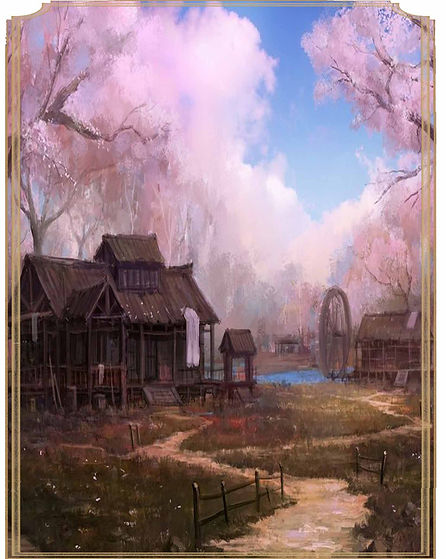
Nōjō or farmlands and fishing villages make up a majority of
communities in the lands of Tochumara.
These communities are simple and mostly left to temselves
as long as they continue to supply the local shogunate,
making many of the farm and fisher folk fairly uninformed to
most political topics.
Farmers an fisherfolk are expected to either supply the
things they farm o fish for or taxes, instead, sometimes a
combination of the two can be negotiated with.
There are few shoguns who would overtax or overburden the
famrlands and fishing villages in their shogunate and those
who do do not usually last long as shoguns in response to this.
Even the most city lived noble and shogun knows the
importance of these folks to be able to feed themselves and
their families.
Defense of a farmland or fishing village greatly depends on its
location. Those closer to empirial capitals and shogunate
cities will have more patrols while those further rural areas
may find themselves fending off wolves, bokemono, and
other monsters on their own, causing even the most peaceful
farmer or fishng folk to train their children in the way of at
least the most basic fighting, or how to use family magical
heirloom relics to helps defend the rural homes or villages.
Kaizoku and Yakuza
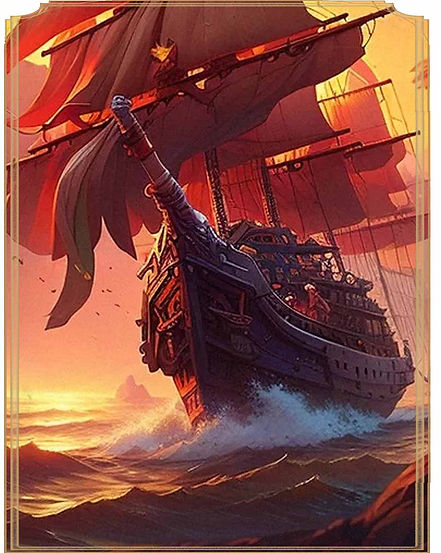
The Kaizoku as Tochumaran pirates are called sail the seas in
small, rare clans. For the same reason as Tochumara is not
often the target of naval attacks from other lands,
so is the same reason not many seafaring
criminals are successful.
Aside from the Emperor of Tochumara having
the largest navy in the world, the emperor
also has an alliance with not just one but
a family of dragon turtles which protect the
waters of Tochumara. The nature of this
alliance is a secret only the Emperor
knows, wisely keeping the temptation of
controlling these powerful sea creatures
out of the hands of others.
The Umi Ken (or Sea Swords) are the largest
and oldest clan of kaizoku, with other, smaller
clans coming and going frequently.
The more land based yakuza, however,
are another story. The yakuza are
similar to the thieve's guilds of the West.
However, the yakuza has its own code of
honor similar to the bushido of the lands,
mainly concerning not robbing the impoverished, not stealing so much
that a shogunate or other domain falls into decay, not killing out of pleasure, and so on.
Theves, ninja acting as assassins or spies, and other criminals.
Criminals acting outside of the yakuza are considered dishonored akin to ronin but can exist, though not in great numbers. Bandit clans do occasionally trouble communities, existing on the fringes of towns and cities and not following or caring for the tenets of honor whatsoever. The bandit clans are often opposed by the yakuza as is part of their own code. This is one of the rare times you might see samurai and ninja working together against the bandits.
The yakuza kage also called the Shdow King is currently Yoru Akikagi, a mysterious leader who is rumored to be one of the rare tieflings in the world though it is unnown as to is true nature as none who have briefly met him speak of it, if they are capable of speaking.

Jinja (Shrines)
Shrines or temples can be found throughout the lnds of
Tochumara, wherever the good peoples can be found. Some
shrines are dedicated to the Dragon Emperor and the Lucky
Seven, some are dedicated to the most honorable and, therefor
the most honored ancestors of the long, detailed history of the
Jade Lands.
Each jinja is overseen by a group of
shukenja who have been assigned or called
to serve the shrine.
Typcally no one except the most vile
bakemono or yokai will attack a jinja, even
creatures such as yeti and dokkaebi (Eastern
goblins) typically leave jinja be.
Depending on the honor possessed by the
sukenja or other priest praying at a jinja, and
whether the jinja is dedicated to the gods, the
ancnstors, or to kami (called a lei jinja), the jinja
will offer benefits to the praying visitors.
As a point of honor, the holy members of a shrine
are obligated to offer healing, sanctuary, and rest
to those in need, despite their beliefs, nobility,
or the state of their honor. Disorderly or violent
visitors can be ousted, of course.


